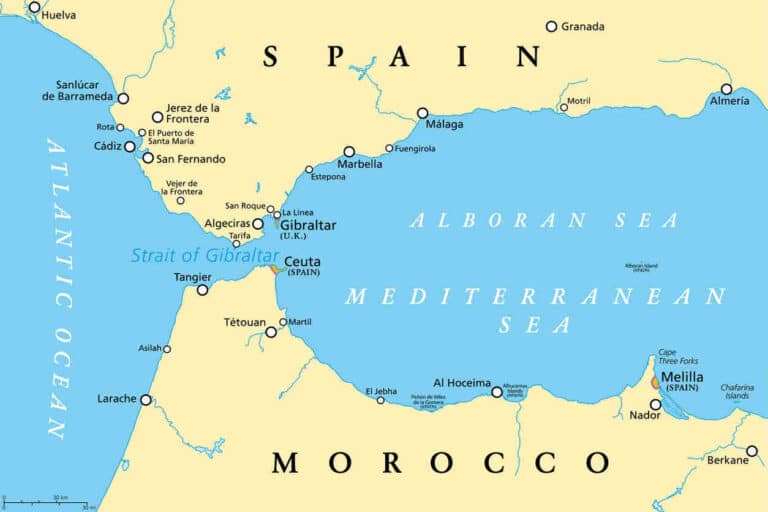

For many, sij kebab is the Moroccan Pinchos Morunos. And both names give us clues about its origin and preparation, which we develop in this post. An explanation that will be interesting especially if you live in Spain or have visited it on one of your trips, as it is a very popular dish and represents an authentic bridge between cultures on both sides of the Strait of Gibraltar.
Why are they called that?
Whether we talk about ‘Sij Kebab’ or ‘Moroccan Pinchos Morunos’, the connections of ideas are deep and complex. In the case of Sij Kebab, which can also be written as sikh kebab, Turkish gastronomy comes to mind. But it is a word that is also used in Arabic ( kabab) and that could actually come from Persian, from where it would have reached both the Turkish and Arabic languages. And its translation could be that of “skewer” or “skewered meat”.
Hence its name always appears associated with Turkish fast food restaurants, but it is also the order of the day in Morocco as a local culinary specialty. In reality, meat skewers are widespread throughout the Near and Middle East, with cross influences from which it is difficult to find the origin, as it is also considered a typical dish in India and Pakistan.
It is likely that it jumped from North Africa to Spanish gastronomy, with a special presence in the south of the country and, above all, in Ceuta and Melilla, the two Spanish cities located in African territory. “Pincho” refers to the skewer or metal stake, and “moruno” to its origin from Morocco.
Ingredients of sij kebab and Moroccan Pinchos Morunos
In reality, each meat skewer (never fish), whether it is the sij kebab or the Spanish pincho moruno, follows its own recipe, with important differences in the ingredients. To begin with, in the type of meat: while the Spanish pincho moruno can contain pieces of pork (although not only) cut into cubes, in the sij kebab this is impossible, since a basic precept of halal food is the prohibition of eating this type of meat. In this way, the sij kebab is usually cooked with lamb meat. In fact, the meshwi, which we talked about in this other post, is also a skewered lamb meat, although in this case not chopped but with the entire animal, after having removed its viscera and skin.
And the second important difference is the meat marinade: although in both cases it is usually macerated for several hours previously, the composition of said marinade changes enormously. In the Spanish case, it usually contains saffron, spicy paprika, oregano, cumin, parsley and pepper, in addition to chopped onion, garlic, oil and salt.
On the other hand, the combination of spices in the Moroccan sij kebab is different. Despite what one might believe (and what is put into practice in many kitchens), these Moroccan skewers do not usually resort to the classic ras el hanout, but rather opt for another mixture of condiments where there is usually ground black pepper, cinnamon, cumin and curry, also adding bay leaf, vinegar, oil, garlic, salt and lemon juice.
When it comes to cooking, the grill is preferred, although in its absence a griddle can also be used. And as an accompaniment, you can opt for tomato, green peppers, yogurt sauces and many others, without dispensing with the classic Arabic bread.
As you can see, the differences between the Moroccan pincho moruno (sij kebab) and the Spanish one are evident. And your trip to this North African country can be the perfect occasion to try it and understand it.